
Three kinds of land, three levels of risk
| Type | What you get | Risk |
|---|---|---|
| Private property with a deed | A public deed recorded in the Property Registry | Low, if the notario checks everything |
| Ejido parcel converted to private ownership (dominio pleno) | Now private property; deeded before a notario | Medium: check the assembly minutes and their registration |
| Ejido parcel not converted | Only a "transfer of rights" or a private contract | High: you don't own it |
An ejido is a rural community that holds land collectively. While a parcel is still under that system, the person "selling" it can only pass their rights to someone inside the same ejido. Before you can get a deed, the assembly has to approve conversion to private ownership (dominio pleno), and that decision must be registered. Even then, on the first sale the Agrarian Law (article 84) gives the seller's relatives, anyone who has farmed the parcel, ejido members, local residents and the ejido itself 30 days to match your offer. That notice and the National Agrarian Registry paperwork are explained in the Bacalar buying guide.
Lots in subdivisions: ask for the permits
Lots of land here are sold as parcels inside a development. That means two risks: the land itself, and whether anyone authorized the subdivision. In February 2025, Quintana Roo's urban development agency (Sedetus) and the Bacalar town government warned about at least seven developments selling lots without permits or licenses. In June 2026, about 200 families filed a criminal complaint over lots sold on a property with no approved plans or proof of ownership.
Before putting down a deposit, ask for:
- The deed to the whole property and a lien certificate (certificado de libertad de gravamen).
- The subdivision license and the lot layout approved by the municipality.
- A survey showing your lot's measurements and boundaries.
- A promissory purchase agreement reviewed by your lawyer, with a closing date.
If an agent is selling it, ask for their Sedetus license number; real estate agents in Bacalar shows how to look it up.
Price per m²: what listings say
Listing sites show asking prices, not sale prices. Lamudi's listing index for land in Bacalar was around MX$3,000 per m² in March 2026 and about MX$3,300 per m² (roughly US$16 per square foot) in September 2026. That average mixes in-town lots, outlying land and lagoonfront parcels, so it says little about any specific lot. The few sourced figures for the shore are on lagoonfront property.
When you negotiate, a licensed appraiser's report counts for more than any portal average. And if a lot costs a fraction of what's asked on the same street, start by checking its paperwork.
Utilities: what it costs to bring them in
A bargain lot can turn costly once you price the hookups.
- Power: ask how far the nearest pole is. If a line has to be run, get a quote from CFE, the federal power utility, before you buy, not after. Outages are frequent in the communities outside town.
- Water: confirm whether there's a connection to CAPA, the state water agency, or you'll depend on a well or truck deliveries.
- Sewer: outside downtown there's no municipal line to hook into, so an outlying lot needs a biodigester or septic tank. Budget for the build and the upkeep.
- Access: a road that's passable year-round, including rainy season.
Sewer coverage figures and the recent outage protests are in the Bacalar real estate guide.
Land with forest or on the lagoon
Clearing jungle takes more than renting a bulldozer: changing forest land use needs federal authorization. In 2025, local media reported the loss of thousands of hectares of forest in the municipality to land clearing.
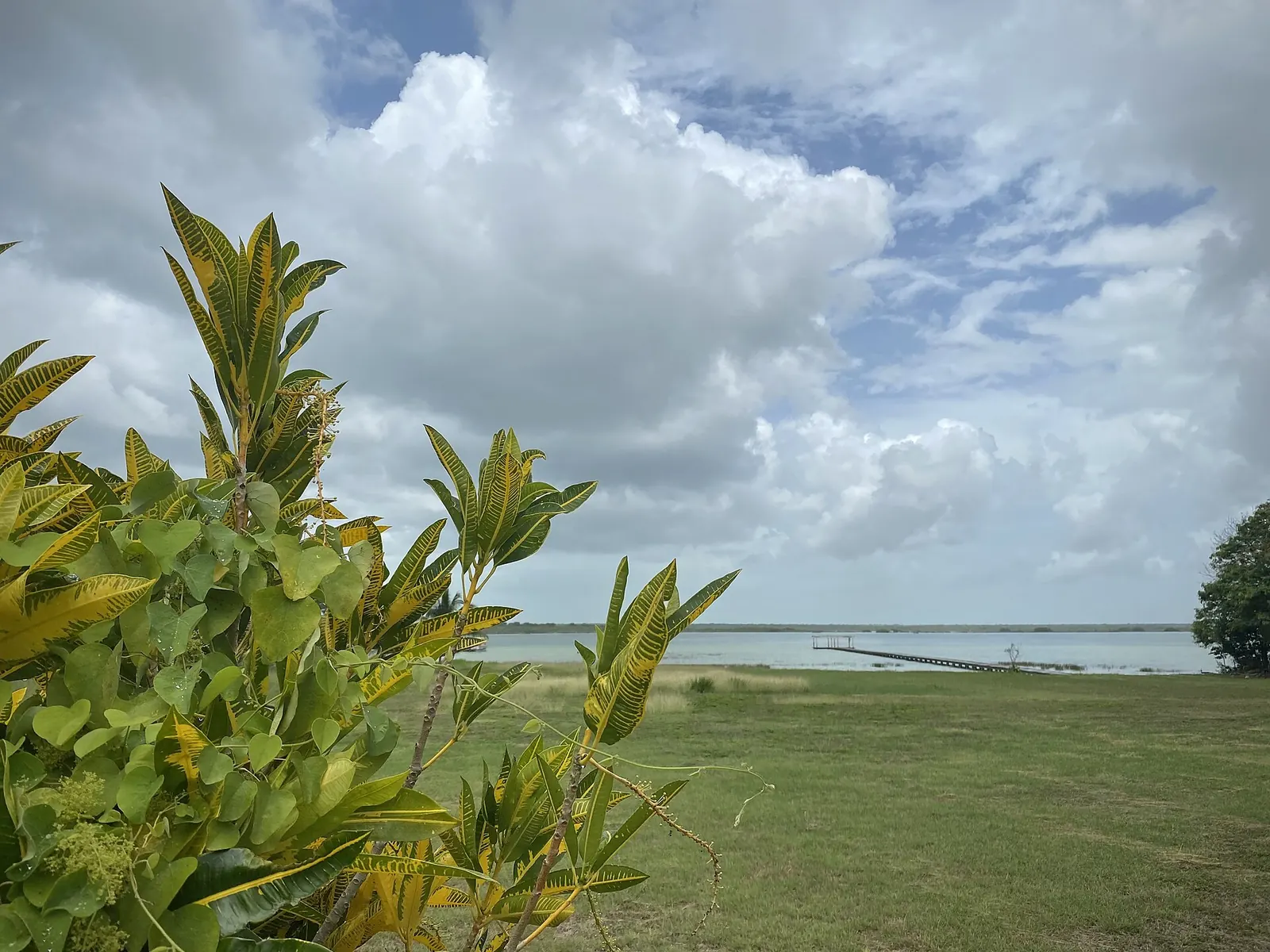
On the lagoon, the lot's deed ends before the water's edge, which is federal land. A dock is a separate application to APIQROO, which manages the lagoon's water surface under a federal port concession. The municipality began drafting its local ecological zoning plan in December 2025, so the rules for building on the shore may change. Requirements and risks: lagoonfront property.
Five checks before you pay for the lot
- The land's status at the Public Property Registry or, if it was ejido land, at the National Agrarian Registry.
- A land-use certificate from the municipality.
- A survey confirming the measurements.
- Property tax (predial) paid up.
- Payment at the signing of the deed, before a notario you picked.
If any document for the lot doesn't add up, stop and take it to a notario (a state-appointed lawyer who handles property transfers) or your own lawyer before handing over money. If you'd rather buy a finished house, see homes for sale.
Have a lot to sell? Add it with the “List your property” button at the bottom of this page.