
Reading tomorrow's forecast and the 7-day outlook
Rain in Bacalar rarely lasts all day. A high chance of rain often means one or two downpours, not a washout. Look at what time the rain is expected and book your boat or kayak trip for the other half of the day.
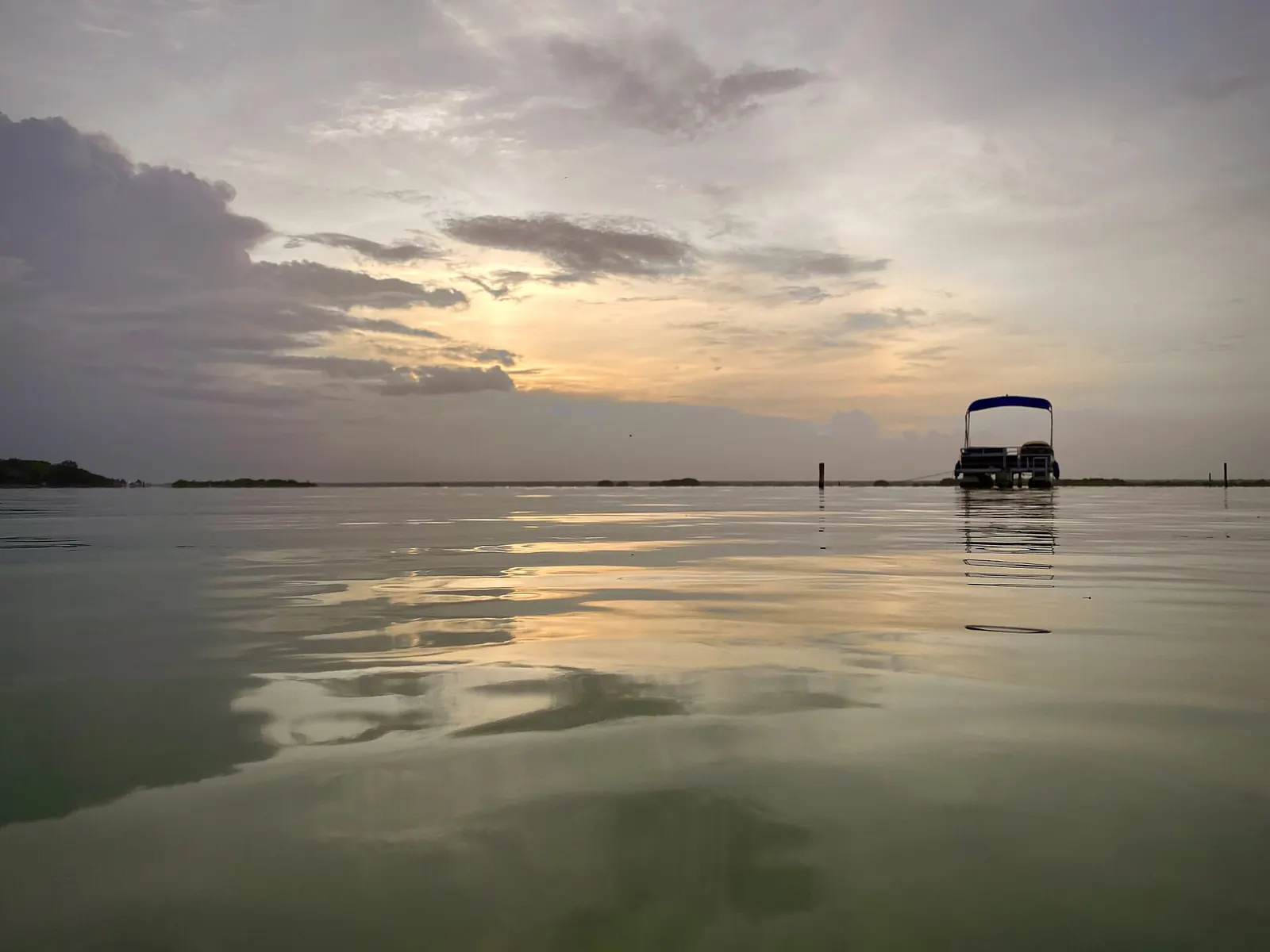
For the lagoon, wind matters more than rain. Strong wind chops up the water, stirs the sediment and dulls the colors. During cold fronts the Port Authority can raise the red flag and close the lagoon to boats, as it did in February 2026. If tomorrow looks windy, move your tour.
Dry season: November to May
According to WeatherSpark's averages, the drier season runs from early November to late May, and March gets the least rain, under an inch. These are the months with clear skies and the brightest water, which is why they line up with high season.
There are two flavors of dry season. January through March is pleasantly warm and less humid. From mid-April into June the heat builds: May is the hottest month, with average highs around 90 °F (32 °C) and lows around 77 °F (25 °C). Plan activities early and save midday for shade or the water.
Nortes: Bacalar's version of winter
From December to early February, highs drop to around 82 °F (28 °C), and January, the coolest month, averages lows of about 67 °F (19 °C). This is norte season: cold fronts that sweep down from the Gulf of Mexico and bring one to three days of wind, clouds and sometimes drizzle.
A norte won't ruin your trip, but it changes the plan. The lagoon turns gray and choppy, and sunrise outings feel chilly. Sunny days usually return between fronts.
Rainy season: late May to October
The rains start in late May and run into early November. September is the wettest month, averaging about 6.6 inches (168 mm), and July is the muggiest. Rain tends to come as heavy downpours; after several wet days in a row, runoff can leave the lagoon cloudier or greener than usual.
The rains bring more mosquitoes and a higher dengue risk. Use repellent and long sleeves at dusk; the rest of the health basics are in is Bacalar safe?.
Hurricane season: June 1 to November 30
The official Atlantic season, which includes the Caribbean, runs from June 1 to November 30, per Mexico's National Weather Service (SMN). The busiest stretch is usually August to October. For 2026, the SMN forecast 11 to 15 named storms in the Atlantic, close to average.
Southern Quintana Roo has taken direct hits. Hurricane Janet devastated Chetumal in 1955, and Hurricane Dean made landfall as a Category 5 near Mahahual on August 21, 2007, causing damage in Bacalar. Most years nothing happens here, but if you're traveling between August and October:
- Check the SMN and the National Hurricane Center a few days out.
- Before you pay, check what your hotel and tour operator do if a storm watch is issued; how to book without losing money is in our guide to when to visit Bacalar.
- If a storm is coming, follow your hotel's and local authorities' instructions; the Port Authority closes the lagoon to boats.
Sargassum: the lagoon doesn't get it
Bacalar Lagoon is sargassum-free. It's an inland freshwater lake with no direct opening to the sea, which the monitoring site Sargazo Monitor confirmed in September 2026. That same month, sargassum did show up in Bacalar Chico, the channel between Mexico and Belize on the Caribbean coast. Same name, different place.
If you're pairing the lagoon with the sea, keep in mind that Caribbean beaches like Mahahual can get sargassum in season. That's one reason Bacalar works as a backup during bad seaweed months.
Water temperature
There's no official published reading of the lagoon's temperature. Local guides estimate about 73–75 °F (23–24 °C) in January and about 82 °F (28 °C) from May through August. It's comfortable for swimming year-round; in winter, the cold part is climbing out into the wind.
What to pack by season
- Year-round: insect repellent, a UV rash guard, a hat, water shoes or sandals, a dry bag for your phone, and Mexican pesos in cash.
- December to February: a light sweater, a windbreaker for the boat, and long sleeves for evenings.
- June to October: a light rain jacket or poncho, quick-dry clothes and extra repellent.
- March to May: light clothing, a refillable bottle for purified water, and a cap; the midday heat is real.
Best and worst months for weather
For weather alone, late January through April is the sweet spot: little rain, warm but not brutal, and bright water. September and October are the toughest, with the most rain and the peak of hurricane season, though they're also the quietest and cheapest months. November through January is good if you can live with the odd norte.
Prices, crowds and festivals by month are in that same when to visit guide. Why sun, wind and rain change the colors is explained in Bacalar Lagoon, and the lagoon photos show the result.