
The difference at a glance
| Holbox | Bacalar | |
|---|---|---|
| What it is | Island off the north coast of Quintana Roo | Town on a freshwater lagoon in the south of the state |
| Water | Ocean | Freshwater lagoon |
| From Cancún | 89 mi (144 km) to Chiquilá (2.5–3 h) + 20–25 min ferry | About 211 mi (340 km): 4–4.5 h by car, 5.5–6.5 h by ADO bus |
| Cars | None; golf cart, bike or on foot | Yes; a car or taxis help |
| Signature activity | Swimming with whale sharks (in season) | Sailing, kayaking, Los Rápidos, cenotes |
| Sargassum | Depends on each year's currents | Doesn't reach it: freshwater, inland |
Sargassum is the brown seaweed that washes up on Caribbean beaches in warmer months. ADO is the intercity bus line most travelers use in the Yucatán Peninsula; you book a numbered seat.
Which is prettier? Depends on what you want
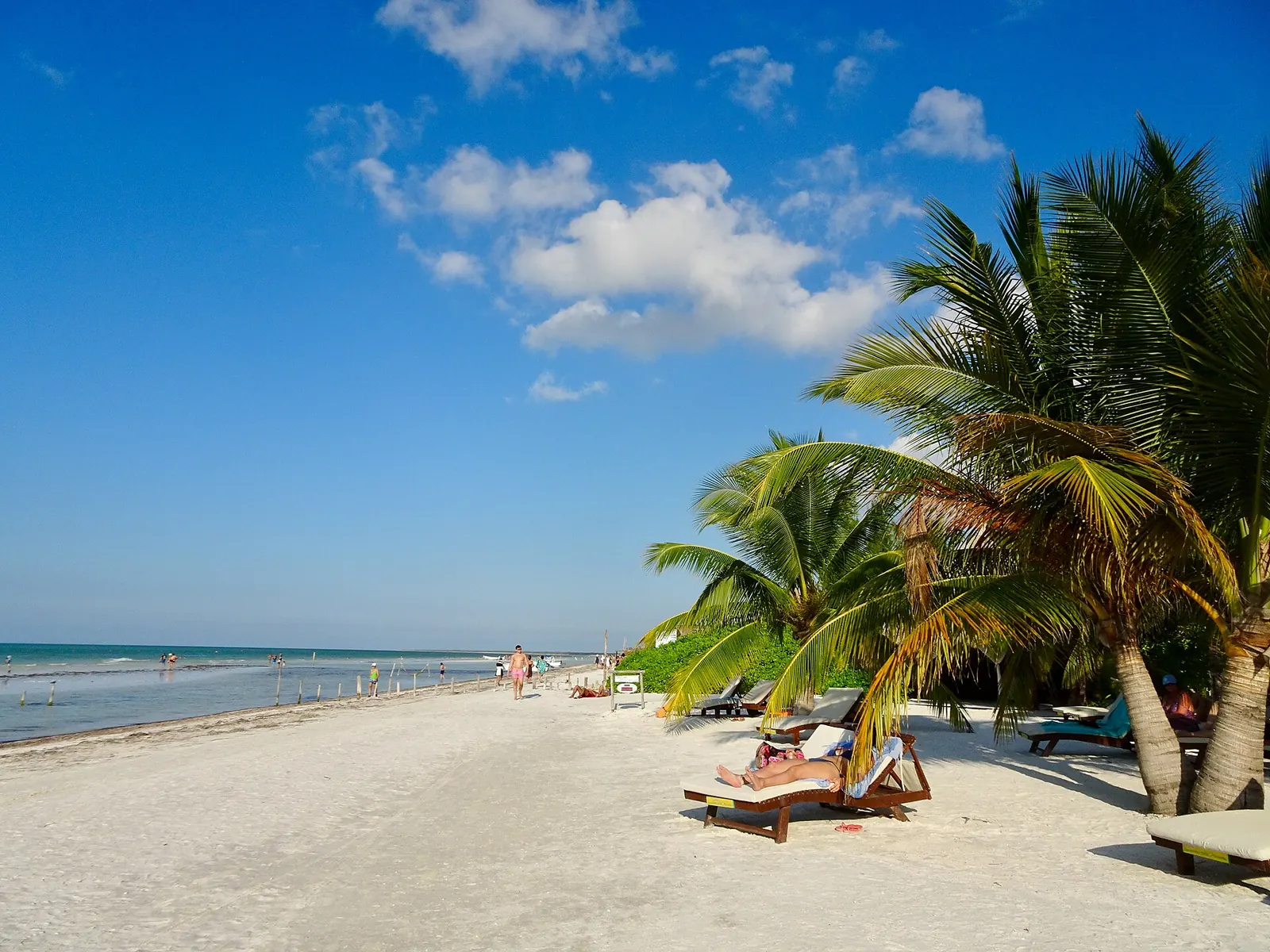
Holbox is a sand beach with shallow ocean water and sunsets over the water. The draw is island life: sand streets, no cars and boat trips to nearby islets.
Bacalar is something else: a long, narrow lagoon with turquoise water over a white bottom and navy-blue patches where a cenote drops away. No waves, no salt. The plan is to swim off a dock, go out on a sailboat or kayak and float down Los Rápidos.
If "pretty" means white sand and ocean, Holbox wins. If it means calm, colorful water you can swim in all day, Bacalar wins. To judge for yourself, browse our Bacalar Lagoon photos.
Which is cheaper?
There's no reliable data comparing hotel prices in the two places. What you can compare are the fixed costs of getting there and of the main activity (dollar figures at about MX$18.5 per US$1):
- Holbox ferry: you pay each way. In 2023 it was MX$220 (about US$12) per adult tourist; a May 2026 guide reports MX$330 (about US$18).
- Parking in Chiquilá: if you drive, US$6–9 per day, according to a 2026 guide.
- Whale shark tour: US$180–200 per person in July 2026, per the Mexican news site Ruptura 360.
- In Bacalar there's no ferry and no fee for the lagoon itself; you pay for the access point you use. Details in Bacalar lagoon entrance fees.
For lodging, compare the same dates in both places: prices swing a lot by season. In Bacalar, start with our hotel guide and what a Bacalar trip costs.
Getting to each one
Holbox: from Cancún you drive 89 miles to Chiquilá, about 2.5 to 3 hours, then take a 20- to 25-minute ferry. There's also an ADO bus from Cancún to Chiquilá, 3 to 3.5 hours. Two companies run the ferry, 9 Hermanos and Holbox Express, with frequent daytime departures.
Bacalar: you drive south from Cancún on Highway 307, roughly 211 miles that take 4 to 4.5 hours, with no ferry involved. By ADO bus it's 5.5 to 6.5 hours, and the Maya Train (Tren Maya) has a stop in Bacalar. Car, bus and train compared: Cancún to Bacalar.
When to go
- Holbox: whale shark season runs roughly mid-May to mid-September, peaking in July and August. Outside those months the beach is still there, but not that activity.
- Bacalar: it works year-round. Watch for heavy rain: in 2020 and 2022, runoff turned the lagoon brown for weeks to months. What each month looks like is in when to visit Bacalar.
Both are in hurricane country; the Atlantic season runs June through November.
What if you do both?
You can, but they're at opposite ends of the state. Chiquilá to Bacalar is more than 250 miles (400 km) by road, plus the ferry, so plan on a full travel day. A sensible route is Cancún → Holbox → back to Cancún or Tulum → Bacalar, flying out of Chetumal. How to use the nights you have left at the lagoon is in our Bacalar itinerary.
Who each one is for
Pick Holbox if you want the ocean, a beach to walk, island atmosphere and it's whale shark season.
Pick Bacalar if you want calm water to swim in, kayaking or sailing, no sargassum and a destination you can drive to without a ferry. If you're torn between Bacalar and Cancún's hotel zone, we compare Bacalar or Cancún.